
17th Aug 2026
Heater Buying Guide NZ 2026: How to Choose the Right Heater


Quick answer: For most New Zealand homes, the right heater depends on the room, how long you will heat it and how quickly you need warmth. For quiet, steady bedroom warmth through the evening, a panel heater or an oil column heater on a thermostat is usually the best choice. For a living room you want to warm quickly on a cold morning, a fan or ceramic tower heater moves heat around fast. For a rental that needs to meet the Healthy Homes heating standard, remember that a portable plug-in heater does not count, so check the fixed-heating rules before you buy. And for a deck or alfresco area, an infrared radiant heater is the practical choice, because heaters that rely on warming the air are generally ineffective outdoors.
How a heater actually warms a room
Every plug-in electric heater turns electricity into heat, and they are all close to 100 percent efficient at doing it, so the type you choose changes how the warmth is delivered rather than how much electricity a heater of that wattage uses. Oil column and panel heaters warm the surrounding air gradually through convection, which suits longer sessions such as an evening in a bedroom or study. Fan and ceramic heaters also heat the air, but use forced airflow to spread the warmth through the room quickly. Infrared radiant heaters direct heat towards people and surfaces rather than the air, which makes them the better choice for covered outdoor areas where warmed air would simply blow away.
Our top heater picks for 2026
Choosing the right heater starts with the room, how quickly you want it to warm up and how long you expect the heater to run. Below, we have shortlisted options for quiet bedroom heating, longer heating sessions, fast warmth in living areas and covered outdoor spaces. Explore the complete Heaters collection within our wider Heating & Cooling range.
Best picks at a glance
| Need | Recommended model | Why it stands out here |
|---|---|---|
| Best for quiet bedroom heating | Fanless Monobloc element with a precision thermostat, so it holds a steady temperature silently. | |
| Best oil column all-rounder | A 2000W oil column for rooms up to 60 cubic metres that keeps radiating warmth after it switches off. | |
| Best smart, app-controlled heater | A Wi-Fi-connected oil column with app scheduling and a precision electronic thermostat. | |
| Best compact heater for small rooms | One of the most compact options in the range, made for quick, localised warmth. | |
| Best ceramic tower heater for living areas | Oscillating ceramic tower that spreads warmth quickly, with a timer and remote. | |
| Best high-output panel heater | A 2400W wall-mountable panel for a larger living room, silent like the rest of the Spot Plus line. | |
| Best high-output oil column heater for larger rooms | A 2400W oil column for rooms up to 75 cubic metres, with a precise electronic thermostat. | |
| Best 3-in-1 purifier, heater and fan | Combines heating, cooling and sealed HEPA H13 purification in one machine. | |
| Best outdoor and alfresco heater | Direct radiant warmth suited to covered outdoor entertaining areas. |

The recommendations below are based on each model's features and intended use. Product details and availability can change, so check the relevant product page before buying.
Best for quiet bedroom heating
Noirot 1500W Spot Plus Panel Heater with TimerA quiet heater for a bedroom or study. The patented fanless Monobloc element produces silent, steady warmth, making it well suited to bedroom use when operated according to the manufacturer's instructions. The precision thermostat holds the temperature you set.
- Key details: 1500W (model 7358-5THW), fanless Monobloc convection element, precision adjustable thermostat, integrated timer, LCD heat setting display, overheat protection, castors and wall bracket included, lifetime warranty.
- Best for: Quiet bedroom heating.
- Keep in mind: Convection panels warm the air gradually, so allow time before bed.

Best oil column all-rounder
De'Longhi TRRSE0920T Radia S 2000W Oil Column HeaterA dependable oil column for a bedroom or medium living room. The sealed oil keeps radiating warmth even after the heater cycles off, which suits long, steady sessions.
- Key details: 2000W oil column for rooms up to 60 cubic metres, with Easytronic electronic controls and 12 temperature settings from 14 to 28 degrees. It also includes three comfort modes (Extra Care, Comfort Temp and Sleep), a 24-hour programmable timer, 360-degree swivel castors and a 7-year manufacturer's warranty.
- Best for: Long, even heating in bedrooms and medium rooms.
- Keep in mind: Oil columns are heavier and slower to warm up than fan heaters.

Best smart, app-controlled heater
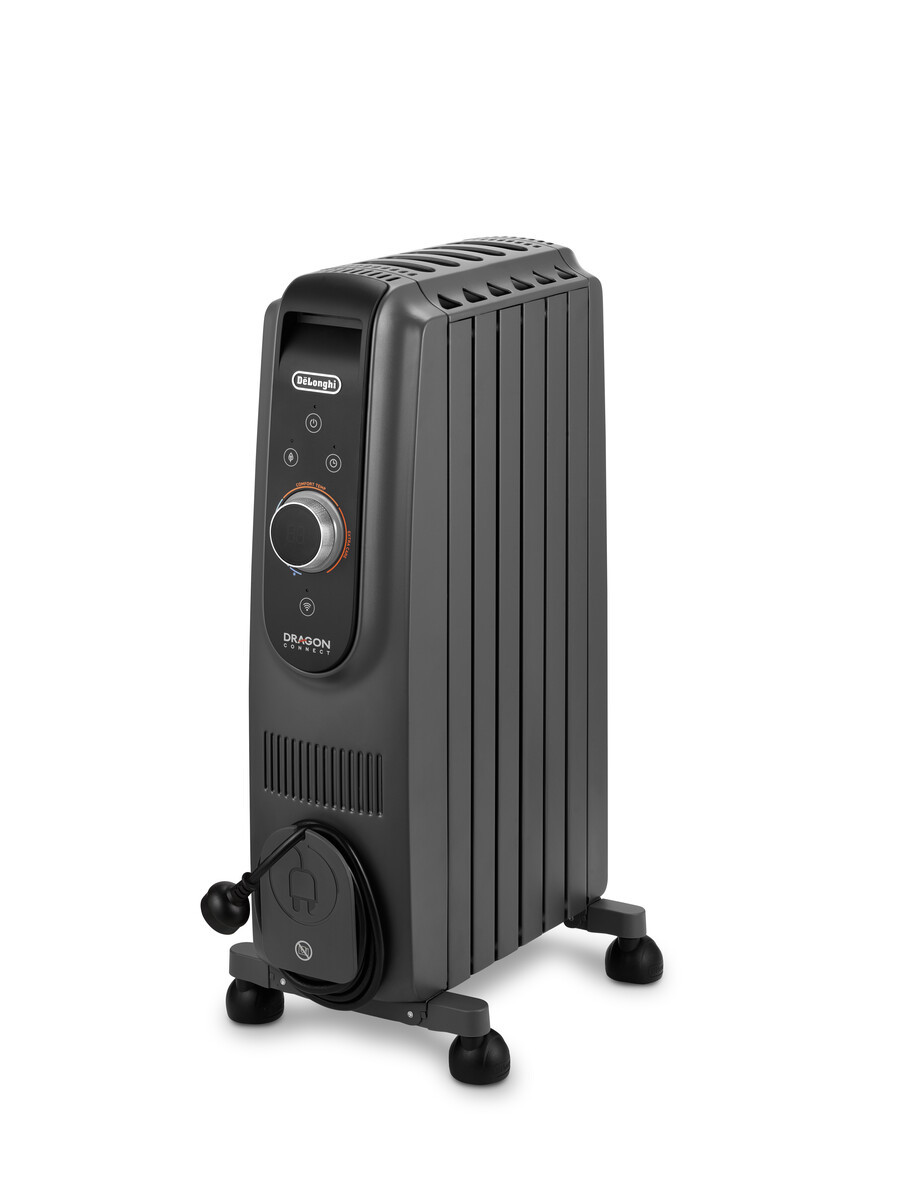
De'Longhi Dragon5 Connect 1500W Smart Oil Column Heater TRD50615WIFI.GThe pick if you want to start the heater from your phone before you get home. It pairs the quiet warmth of an oil column with remote temperature control and scheduling through the My Comfort Hub app.
- Key details: 1500W oil column for spaces up to 45 cubic metres, with My Comfort Hub app control for temperature and schedules and a precision electronic thermostat. It adds Sleep, Comfort and Extra Care modes, a chimney-effect design for even heat distribution, intelligent power modulation that De'Longhi says can cut consumption by up to 25 percent, 360-degree castor wheels with dual handles and a 7-year manufacturer's warranty.
- Best for: Households that want app control and scheduling.
- Keep in mind: You pay for the smart features, so it makes most sense if you will actually use the app.
Best compact heater for small rooms
De'Longhi Ceramic Capsule Fan HeaterA small, fast heater for taking the chill off a study, home office or compact bedroom. It is one of the most compact options in the range, designed for quick, localised warmth.
- Key details: 1800W (model HFX30C18IW), two power levels, ceramic heating, anti-frost function, summer ventilation setting, mechanical controls, safety thermostat, carry handle, 2-year warranty.
- Best for: Quick, localised heating in a small study, home office or compact bedroom.
- Keep in mind: Fan heaters heat while running and cool quickly once off, so they suit short bursts rather than all-day use. Follow the safety basics below, and only use any heater in a bathroom if the manufacturer explicitly confirms it is suitable for wet areas.

Best ceramic tower heater for living areas
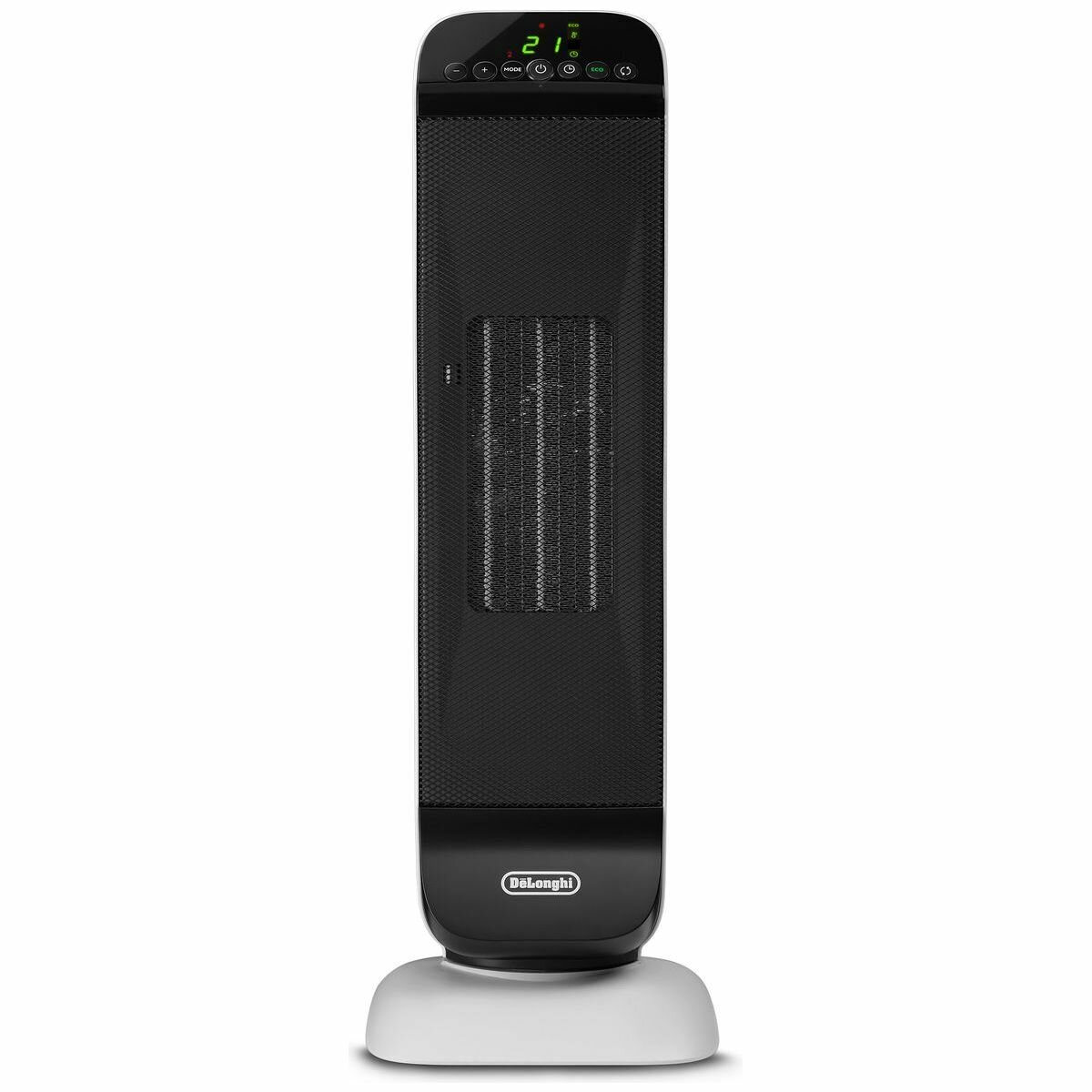
De'Longhi 2000W Ceramic Tower HeaterFor fast warmth across a living area, this oscillating tower spreads heated air across the room rather than aiming it at one spot.
- Key details: 2000W oscillating ceramic tower (model HFX25S20), digital control panel, thermostat, 24-hour timer, remote control, eco function, Silence system, safety auto-off if tipped over, carry handle.
- Best for: Fast, directional warmth in a living area.
- Keep in mind: Like all fan-driven heaters, it cools down quickly once switched off, so it suits active use rather than all-day background heating.
Best high-output panel heater
Noirot 2400W Spot Plus Panel Heater with TimerSuited to a larger lounge, this 2400W panel carries the same silent Monobloc element as the rest of the Spot Plus line and can be wall-mounted.
- Key details: 2400W (model 7358-8THW), fanless Monobloc element, precision adjustable thermostat, integrated timer, LCD heat setting display, overheat protection, castors and wall bracket included, lifetime warranty.
- Best for: Silent heating in a larger living room.
- Keep in mind: For a rental main living room, read the Healthy Homes rules below before relying on any electric heater.

Best high-output oil column heater for larger rooms
De'Longhi Dragon 5 2400W Oil Column Heater TRD51024TBuilt for larger rooms, the Dragon 5 delivers steady, quiet warmth over long evenings without the noise of a fan.
- Key details: 2400W oil column for rooms up to 75 cubic metres, with an electronic thermostat accurate to within 0.5 degrees and Easytronic controls with a 24-hour programmable timer. The chimney-effect design speeds up even warmth, and it rolls on 360-degree castors with integrated handles, backed by a 7-year manufacturer's warranty.
- Best for: Larger rooms that need sustained warmth.
- Keep in mind: Higher wattage means higher running cost per hour, so use the thermostat and timer.

Best 3-in-1 purifier, heater and fan
Dyson Purifier Hot+Cool HP2 De-NoxThis is the premium all-season option, combining winter heating, summer cooling and year-round air purification in a single machine.
- Key details: Purifier, heater and fan in one, with a 360-degree Glass HEPA H13 and activated carbon filter that removes 99.95 percent of particles as small as 0.1 microns (tested to EN1822 standards). It adds De-Nox technology to reduce nitrogen dioxide, 350-degree oscillation, 10 airflow settings, real-time air-quality reporting and connected controls through the MyDyson app, and a 2-year warranty.
- Best for: Buyers who want heating, cooling and air purification in one.
- Keep in mind: For safety, heating mode cannot be activated remotely through the app, although other connected controls and air-quality reporting remain available; you switch heating on at the machine or with the remote.

Best outdoor and alfresco heater
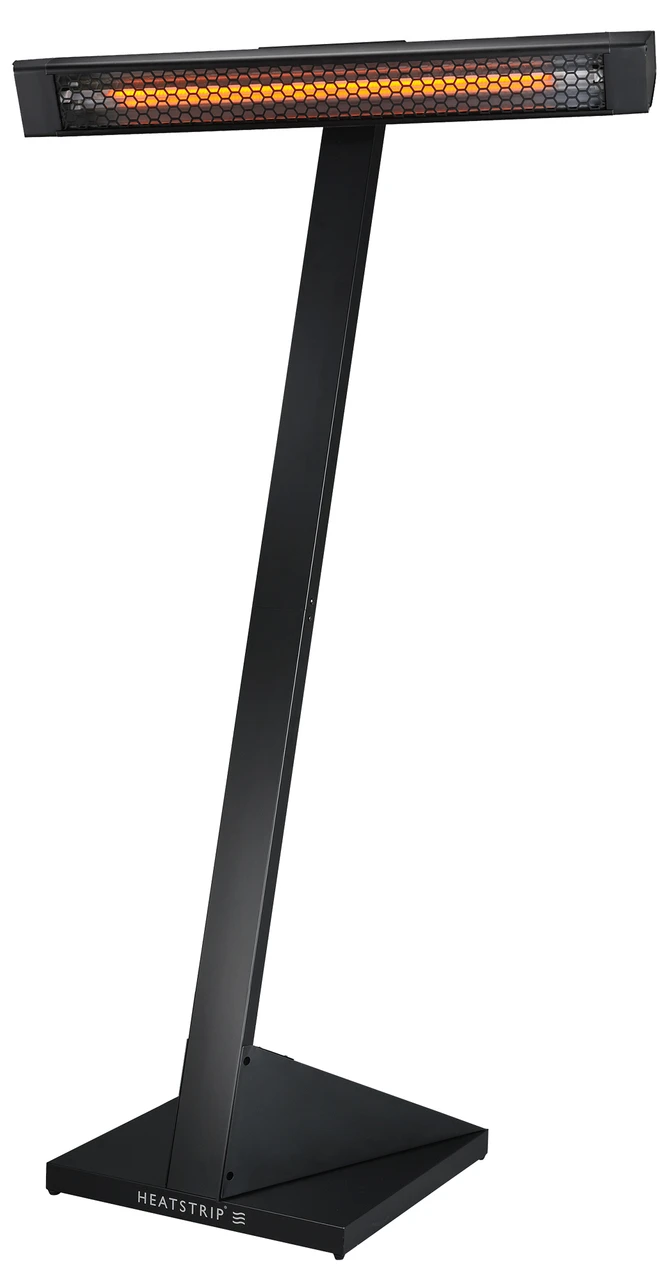
Heatstrip 2200W Intense Portable Infrared Radiant HeaterDesigned for covered outdoor entertaining, the Heatstrip directs warmth towards people and surfaces rather than trying to heat the surrounding air, so a passing breeze does not carry the warmth away.
- Key details: 2200W (model THY2200P), carbon filament infrared radiant element, portable stand with in-built wheels, sub-assembled for DIY installation with concealed cable, suitable for covered indoor and outdoor areas.
- Best for: Covered outdoor entertaining areas.
- Keep in mind: For fixed outdoor installations, compare the wider outdoor heaters range.
How to choose from the Magness Benrow range
| Customer need | Best direction | What to check |
|---|---|---|
| I want quiet, steady heat for a bedroom | A panel heater or oil column on a thermostat, such as the Noirot Spot Plus or De'Longhi Radia S | Thermostat, timer, and a wattage matched to room size |
| I want a room warm quickly | A fan or ceramic tower heater, such as the De'Longhi Ceramic Tower | Fan and oscillation, plus a thermostat to avoid overheating |
| I want to control the heater from my phone | The De'Longhi Dragon5 Connect Wi-Fi oil column | App support and scheduling that you will actually use |
| I want one appliance for more than heating | The Dyson Purifier Hot+Cool HP2 De-Nox | Whether you value cooling and purification enough to pay for them |
| I want one appliance for several cooking jobs | Air fryer ovens and benchtop ovens with air fry | Bench space, cavity size, racks, included accessories |
| I am heating a covered deck or patio | An infrared outdoor heater, such as the Heatstrip Intense | Mounting or portable stand, and covered, sheltered placement |
| I am a landlord meeting Healthy Homes | Read the heating standard first, as portable heaters do not qualify | Fixed heating, a thermostat, and the required capacity for the room |
What size heater do you need?
Wattage is the first thing to match to your room. As a starting point, the panel heater maker Noirot suggests allowing around 100 watts per square metre of floor area, then adding headroom for rooms that lose heat quickly. Insulation, glazing, ceiling height, draughts, your local climate and whether the room can be closed off all shift the answer, so treat any rule of thumb as a starting point rather than a guarantee.
Heater size guide for NZ rooms
| Room and use | Suggested wattage | What it suits |
|---|---|---|
| Small study, home office or single bedroom (under about 12 square metres) | 1000W to 1500W | Quick warmth or gentle background heat in a small space |
| Standard double bedroom (about 12 to 16 square metres) | 1500W to 2000W | Steady bedroom heating on a thermostat |
| Medium living room (about 16 to 24 square metres) | 2000W to 2400W | Warming a family living area in winter |
| Large or open-plan living area | 2400W or a heat pump | Bigger spaces where a single portable heater may struggle |
Suggested wattages are based on roughly 100 watts per square metre with an allowance for typical NZ conditions. Poorly insulated, draughty or high-ceilinged rooms need more.
A higher-wattage heater uses more electricity while operating at full output, but it may reach your selected temperature sooner and then cycle off through its thermostat. Overall energy use depends on how quickly the room loses heat, its insulation, your temperature setting and how long the heater runs, so choose enough capacity to heat the room comfortably without relying on unnecessary excess output. If a space is genuinely large or open-plan, EECA notes that a heat pump is far more efficient than plug-in electric heaters, putting out around three times more heat than the power it consumes, so weigh a big portable heater against a fixed heat pump over a whole winter.
Oil column, panel, fan or infrared?
Oil column heaters contain an electric element surrounded by permanently sealed oil. The heated oil warms the metal columns, which then warm the surrounding air gradually and keep releasing warmth after the thermostat cycles the heater off. Quiet and well suited to longer, steady heating sessions when used according to the manufacturer's instructions, they are a classic bedroom choice, though they are heavier and slower to warm up than other types.
Panel heaters are slim convection heaters that sit on castors or mount on a wall. The Noirot Spot Plus models run silently and suit bedrooms and studies, and the De'Longhi SlimStyle panel heater sits in the same family.
Fan and ceramic heaters blow warm air, so you feel the heat quickly and it spreads across the room, especially with oscillation. They are ideal for a fast morning warm-up, though they cool down quickly once switched off and make some noise.
Infrared radiant heaters heat people and objects directly rather than the air, which is why they stay effective on a covered deck where other types struggle. Indoors, they work best as spot heating.
Heater features worth paying for
A thermostat. This is one of the most useful features for running cost, because it lets the heater cycle off once the room is warm instead of running flat out. EECA advises choosing a heater with a built-in thermostat, which regulates the room temperature by controlling the power supplied to the heater and can reduce energy use by around 9 percent.
A timer. A timer lets you warm a bedroom before you wake or a lounge before you get home, and switch off automatically so you are not heating an empty room.
Safety cut-outs. Look for overheat protection and, on freestanding models, a tip-over switch. These matter most in homes with children or pets. The Noirot panels above include overheat protection, and the ceramic tower switches off automatically if tipped over.
Wall-mounting. A panel heater that mounts on the wall stays out of the way and off the floor. For rentals, some wall-mounted electric panel heaters may qualify as fixed heating in smaller living rooms, but only when permanently installed and when all Healthy Homes capacity, thermostat and installation requirements are met, so use the official heating assessment tool before purchasing.
Wi-Fi and app control. Genuinely useful if you want to schedule heating remotely, as on the De'Longhi Dragon5 Connect, but not worth paying extra for if you will never open the app.
Using a portable heater safely
A few habits make any portable heater much safer, whichever model you choose.
- Plug heaters directly into a wall socket, never into an extension lead or power board.
- Follow Fire and Emergency New Zealand's heater metre rule: keep clothing, curtains, bedding, furniture and anything else that can catch fire at least one metre away from the heater.
- Never cover a heater or use it to dry washing.
- Never leave a portable heater running when nobody is home. Only use a heater overnight where the manufacturer explicitly permits overnight operation, and always follow its clearance, thermostat and safety instructions.
- Only use a heater in a bathroom if the manufacturer explicitly confirms it is suitable for wet areas.
Heaters and the Healthy Homes standard
If you are a landlord, this matters before you buy. Under the Healthy Homes heating standard, the main living room of a rental must have one or more fixed heaters that can directly heat it to at least 18 degrees Celsius. Tenancy Services states that the heaters "must be fixed (not portable) and must be at least 1.5 kW in heating capacity and meet the minimum heating capacity needed for the main living room." Portable plug-in heaters do not qualify, regardless of their wattage. Electric heating is also capped, because Tenancy Services notes you "cannot use an electric heater (except a heat pump) if the required heating capacity for the main living room is over 2.4 kW," unless you are topping up qualifying heating installed before 1 July 2019. For most living rooms that means a heat pump, wood burner or flued gas heater is the practical answer. Some wall-mounted electric panel heaters may qualify as fixed heating in smaller living rooms, but only when permanently installed and when all Healthy Homes capacity, thermostat and installation requirements are met. Use the Tenancy Services heating assessment tool to work out the required capacity for your specific room before purchasing.
For bedrooms and supplementary comfort heating outside the main living room, where the standard does not require fixed heating, the portable oil column, panel and fan heaters in this guide are all practical options. As Tenancy Services notes, the World Health Organization recommends a minimum indoor temperature of 18 degrees Celsius, and EECA suggests keeping rooms around 18 degrees to help reduce damp and mould, which is a real issue in many older, poorly insulated New Zealand homes.
What heaters cost to run
MBIE's Quarterly Survey of Domestic Electricity Prices modelled a national retail electricity price of approximately 42 cents per kWh for its representative household in its 15 May 2026 survey. That figure reflects advertised plans for a typical household rather than what any individual customer actually pays, and the modelled rate varies widely by region, from about 37 cents per kWh in Wellington City to about 52.5 cents per kWh in Balclutha. At that indicative 42 cent rate, a 1000W heater costs around 42 cents per hour at full power, a 2000W heater around 84 cents, and a 2400W heater around $1.01. Because all plug-in electric heaters are close to 100 percent efficient, heaters of the same wattage cost about the same to run at full output whatever their type. To estimate your own cost, multiply the heater's output in kilowatts by the per-kWh rate on your electricity plan: a 2kW heater on a 35 cents per kWh plan, for example, costs about 70 cents per hour at full output. Your actual cost will depend on how often the thermostat cycles the heater on and off, and a timer reduces it further by keeping the heater off when the room is empty. If you are heating a large space every day through winter, a heat pump's much lower running cost can outweigh its higher purchase price over time.
Frequently asked questions
For a single room, the most economical portable option is usually a correctly sized heater with a thermostat, used only when the room is occupied. Plug-in electric heaters of the same wattage cost approximately the same to run at full output because they are all close to 100 percent efficient. For a large room or whole home used daily, a heat pump is far cheaper to run, putting out around three times more heat than the electricity it uses according to EECA.
Shop heaters at Magness Benrow
Browse the full heaters range online, or go straight to the oil heaters, panel heaters or fan heaters sections. For more appliance advice, read our air fryer buying guide or our washing machine buying guide. And if you would rather talk it through in person, come and see us:
If you are making a trip for one particular model, check the live product page or call ahead first for current online and in-store availability, including click and collect.